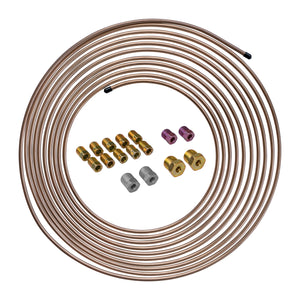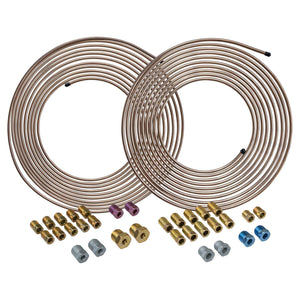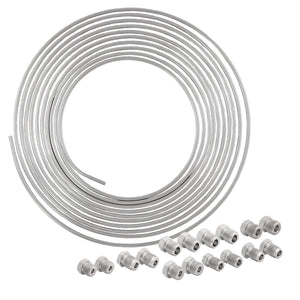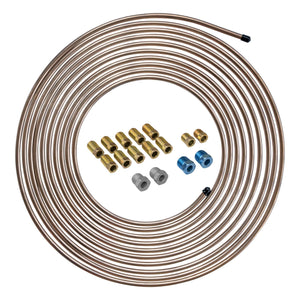
Brake Line Repair Kits — Everything to Fix a Line in One Box
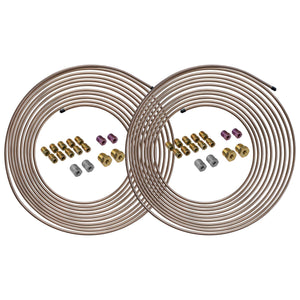
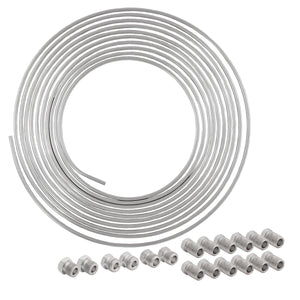
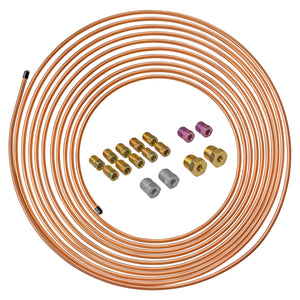
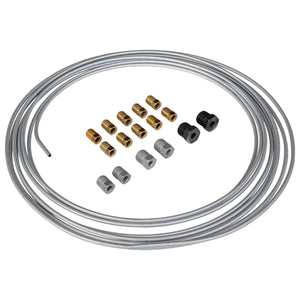
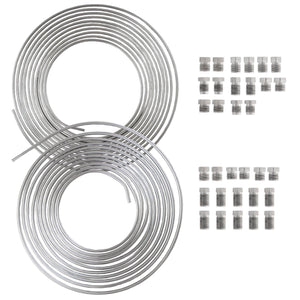
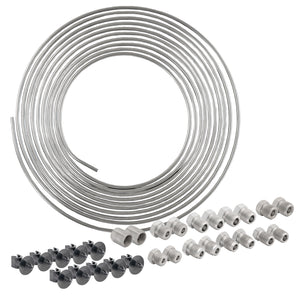
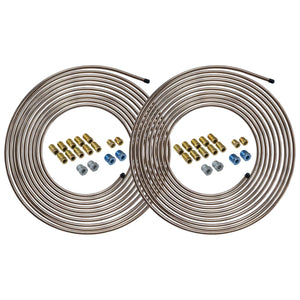
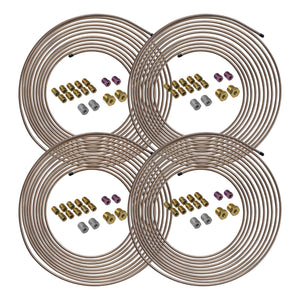
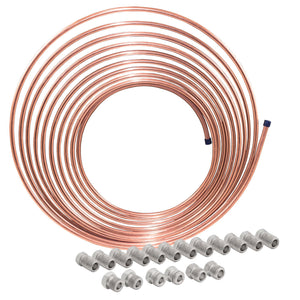
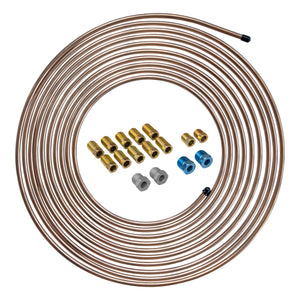
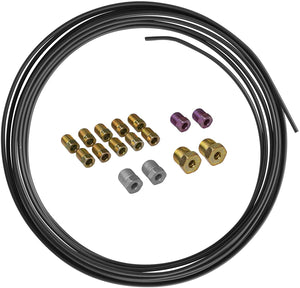
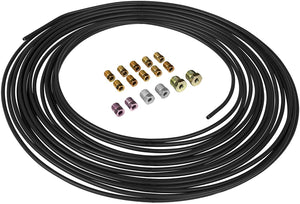
A brake line repair kit gives you the tubing, fittings, and hardware to replace a corroded or damaged line without hunting down parts at three different stores. Whether you're patching a single rusted section or re-lining a whole vehicle, every kit below is DOT-approved and backed by our lifetime warranty — available in 3/16" and 1/4", and in copper-nickel, PVF-coated steel, stainless, and more.
Which Repair Kit Do I Need?
| Your situation | Best kit |
|---|---|
| One rusted section, want full routing control | Coil kit — cut, bend & flare to length |
| Want pre-flared, vehicle-specific sections | RightQuick kit — skip the flaring step |
| Single straight run | Pre-cut line with fittings installed |
| Re-lining the whole vehicle | Complete brake line kit |
Choose Your Material
Copper-Nickel — rust-proof, bends by hand, flares with basic tools. The best choice for DIY repairs and Rust Belt vehicles. Stainless Steel — maximum strength and a polished look for show cars and performance builds. PVF-Coated Steel — OE-style steel with a corrosion-resistant coating rated for years of salt exposure.
Tools You'll Need
For coil kits: a tubing cutter, a flaring tool, a tube bender, and a tubing straightener for clean runs. RightQuick kits arrive pre-flared, so you can skip the flaring tool entirely. New to it? See our essential DIY brake line tools guide.
FAQ
What's the difference between a repair kit and a full brake line kit?
A repair kit has enough tubing and fittings to replace one or more sections; a complete kit carries enough to re-line an entire vehicle. Both ship with the fittings you need.
Do I need special tools to install a repair kit?
For coil kits, a tubing cutter, flaring tool, and bender. RightQuick kits come pre-flared, so you can skip the flaring step.
Which material should I choose for a Rust Belt daily driver?
Copper-nickel — it never rusts, so the repair outlasts the vehicle.
Is copper-nickel brake line DOT-approved?
Yes. Our copper-nickel tubing meets SAE J1047 / ISO 4038 and is street-legal in all 50 states.